
AEO, GEO, and SEO: How to Leverage Search to Drive Growth in 2026

Cecilia Tao
April 4, 2026
Every year, someone declares SEO is dead. It's been happening since 2011, and it still hasn't come true. Whether you call it SEO, AEO (Answer Engine Optimization), or GEO (Generative Engine Optimization), the fundamentals haven't changed. Users are still searching. The platforms change, Google, ChatGPT, Claude, Gemini, but the behavior doesn't. What has changed is how people search. It used to be 3-5 keywords typed into Google. Now it's 60-word questions asked to an AI chatbot.
As a growth marketer, I've been experimenting with AEO/GEO and traditional SEO side by side. Here's what I've learned so far, what's actually worked, and how to approach it even if you don't have a budget to afford an AEO tool.
How Does AEO/GEO Tool Actually Work?
Here's the reality: AEO measurement is still a black box. The major LLM providers (OpenAI, Anthropic, Google) don't disclose user prompt data. There's no reliable way to measure exact prompt volumes today. The one exception is Microsoft Bing Webmaster Tools, which just launched an AI Performance dashboard in February 2026, making it the first major search platform to offer AI search reporting.
So how do AEO tools actually get their data?
Since LLM providers don't share prompt data, these tools have to get creative. They start with traditional search keyword data from tools like SEMRush and Ahrefs to understand what people are already searching for. Then they use those keywords to simulate prompts across AI chatbots, recording which brands and URLs get cited in the responses, and tracking that over time. The logic is simple: people's core interests don't change just because they moved from Google to ChatGPT. So traditional search volume is still a solid proxy for what users are likely asking AI.
The key things they track: whether your brand appears in AI-generated answers, whether your content gets cited as a source, how prominent your brand is compared to competitors, and even the sentiment of how AI talks about you.
One thing to keep in mind: these tools are simulating AI search behavior, not measuring it directly. No AEO tool has access to real prompt data from LLM platforms. Your results are only as good as the keywords and prompts you feed the system.
ChatGPT alone has 800 million weekly active users generating over 2.5 billion prompts per day (as of late 2025). Most AEO tools track somewhere between 100-600 prompts. That's a tiny sample. It won't give you the full picture, but it gives you directional data, and directional data is better than flying blind.
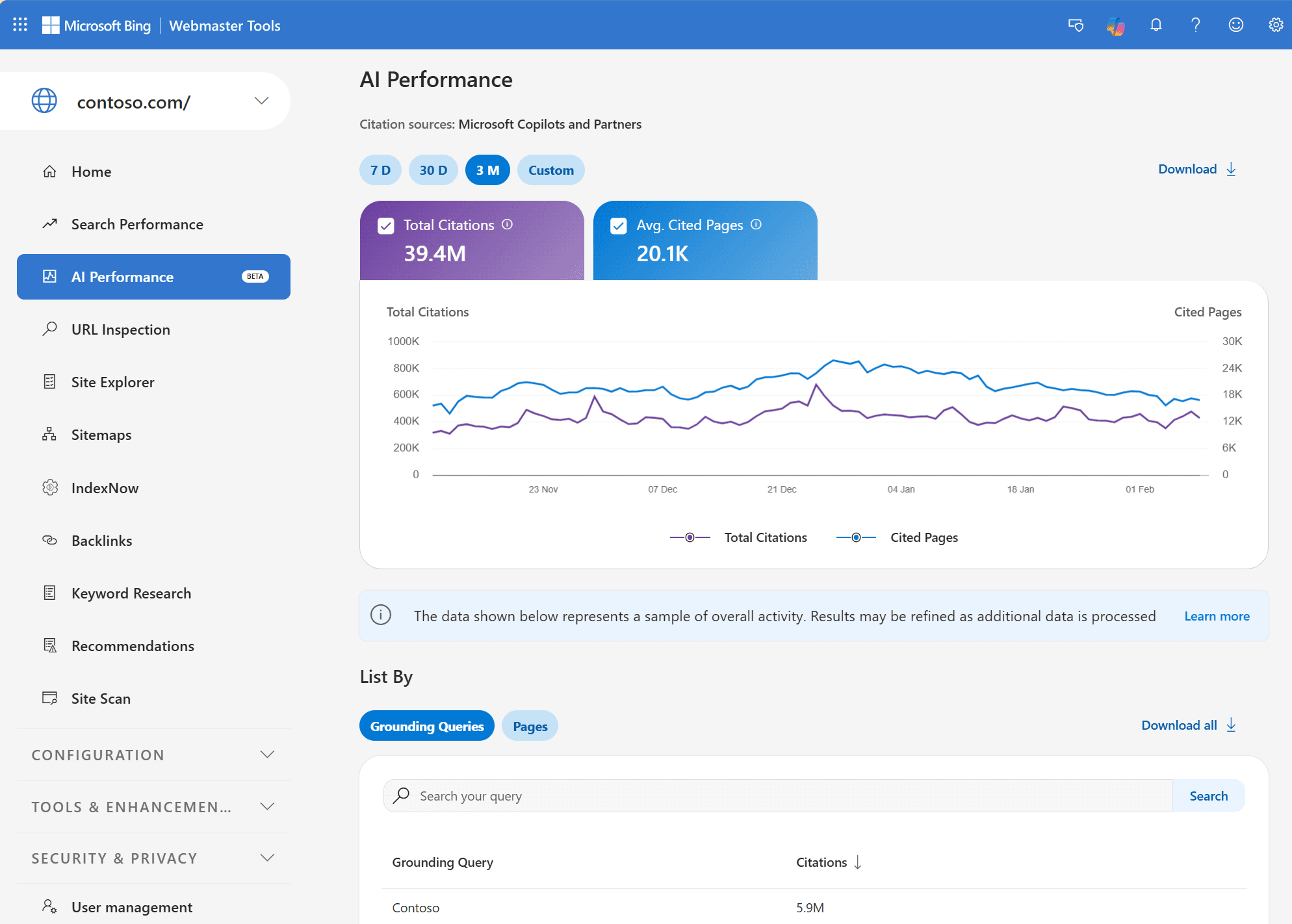
Bing Webmaster Tools AI Performance Dashboard
How to Measure AEO Success
We can't get exact prompt data from AI chatbots, but that doesn't mean we're flying blind. Here's how I measure AEO success using first-party data:
Referral traffic tracking. Monitor referral traffic from chatgpt.com, gemini.google.com, claude.ai, and perplexity.ai in website analytics tool like Google Analytics 4 or Mixpanel. This is the most direct signal you have.
You can also take it a step further and directly track product key metrics, such as signup conversions, from AI-referred traffic. Similarly, monitor the AI search source data in your CRM to see how AI search platforms contribute to your revenue.
Brand search trend monitoring from Google Search Console data. Not every user who discovers you through an AI chatbot will click the link right there. Many will search your brand name on Google afterwards. Pull data from both Google Search Console and Bing Webmaster Tools to track whether your brand search volume is trending up.
One thing I'm watching closely: now that ChatGPT has started running ads, I expect they'll begin disclosing more user prompt data, because advertisers will demand search data to measure ad performance. That could be a game-changer for AEO measurement.
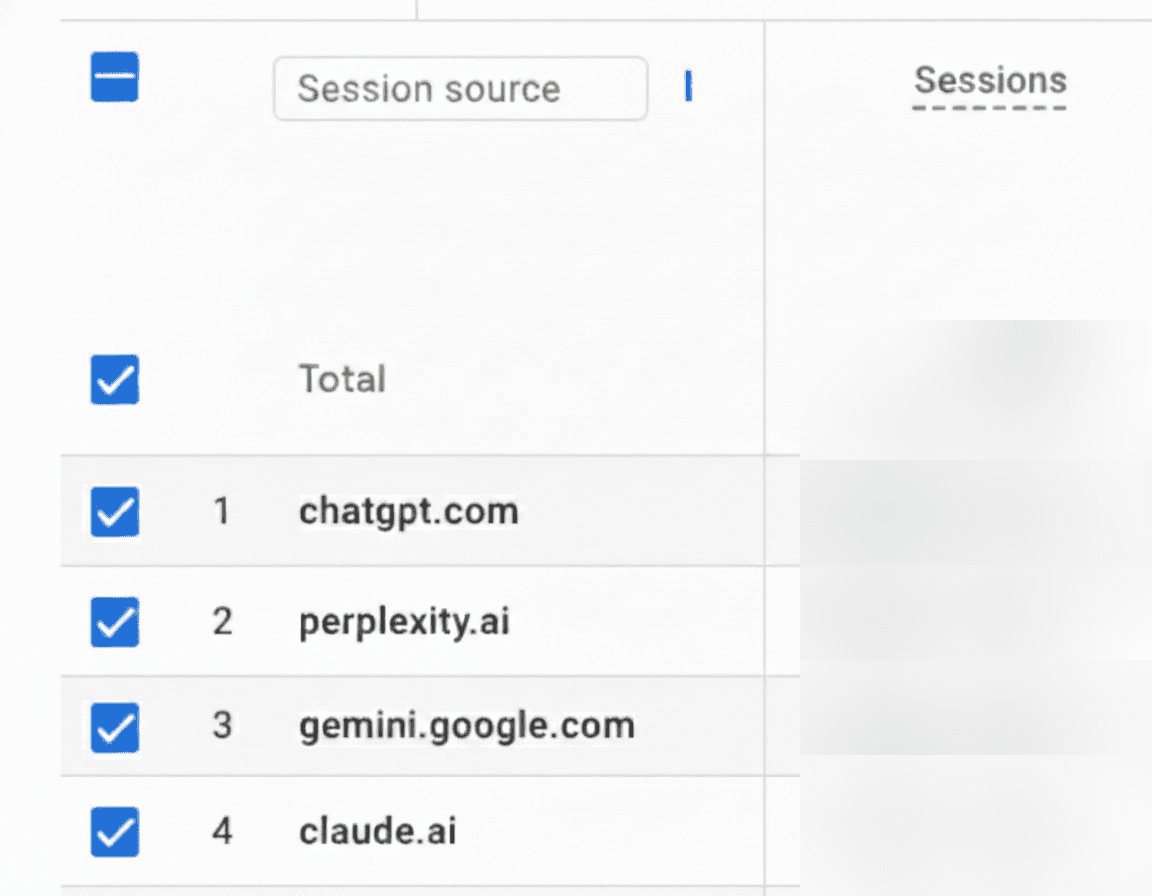
Tracking AI referral traffic in analytics
Is It Worth Investing in an AEO Tool?
It depends on your budget and resources.
Most AEO tools offer some combination of: brand visibility tracking across AI chatbots, AI-assisted writing, and some even provide done-for-you writing services. On the writing side, most include topic and keyword research, pre-built SEO workflows, and a centralized knowledge base where you upload your brand documents so the tool can generate content for you, instead of manually uploading docs to ChatGPT or Claude every time.
Pricing ranges widely. Simply tracking AI search visibility for a set of prompts can cost $100–$499/month. To unlock full platform features, you're looking at $5K+ per month.
Before you evaluate AEO tools, ask yourself:
Do you have the budget? Full AEO platforms aren't cheap. If $5K per month isn't realistic for your stage, that's okay. There are cheaper alternatives.
Do you have the bandwidth to set it up properly? AEO tools are only as good as what you put in. You need time to build the right tracking panel, upload your knowledge documents, and actually use the writing workflows. The AI search visibility data depends entirely on your inputs.
If you don't have the budget for a dedicated SEO keyword research tool, you can simply open a Google Ads account and use Google's Keyword Planner to get search volume data for free.
If you don't have the budget for a dedicated AEO tool, start with what you already have. Monitor AI referral traffic in your existing web analytics tools like mentioned above, and pull search data from Google Search Console and Bing Webmaster Tools. Bing just started disclosing AI citation data in their new AI Performance dashboard, so that's worth setting up if you haven't already.
How to Optimize for AEO Without a Big Budget? The Scrappy Playbook
You don't need an expensive tool to start optimizing for AEO. Here's how to do it on a shoestring:
Use Google's Keyword Planner (free) to gauge user search interest. Register a Google Ads account and use the Keyword Planner to get a sense of search volume for your target keywords.
Test your visibility in ChatGPT manually. I often run my target question keywords in ChatGPT using an incognito browser to make sure the results aren't influenced by previous conversations, and I run them 3 times. Note which articles get cited and which brands show up. It's manual, but it's free and gives you a real snapshot of where you stand.
Track AI chatbot referral data in GA4. Google Analytics 4 is free, and you can set up referral tracking for AI chatbot traffic in minutes.
How to Find the Right Questions to Optimize for AEO
Good AEO starts with understanding what questions your audience is actually asking. Here's where I go to find that:
Reddit. When I see a keyword with high search volume on Google, I'll search that same keyword on Reddit to see which posts rank highest. Reddit threads often surface the exact questions and pain points your audience has.
Google's “People Also Ask” section. These are the follow-up questions people are asking, laid out for you.
SEO keyword research tools. In SEMRush, click on “Questions” to filter for question-based keywords specifically. Ahrefs surfaces similar data.
Internal customer feedback channels. Check what customers are frequently asking your support team. This is first-party data. It's invaluable.
Sales calls. The sales team hears questions every day. That's content waiting to be written.
Ask AI to brainstorm. After you identify keywords with relatively high search volume from Google Keyword Planner or SEMRush, try this prompt:
You are an AEO expert. We offer [your product/service] and our target persona is [your audience]. I want to optimize these high-volume keywords: [paste your keywords] to improve my AI search visibility. Help me come up with the top 20 questions that users are most likely to ask AI chatbots about these topics.
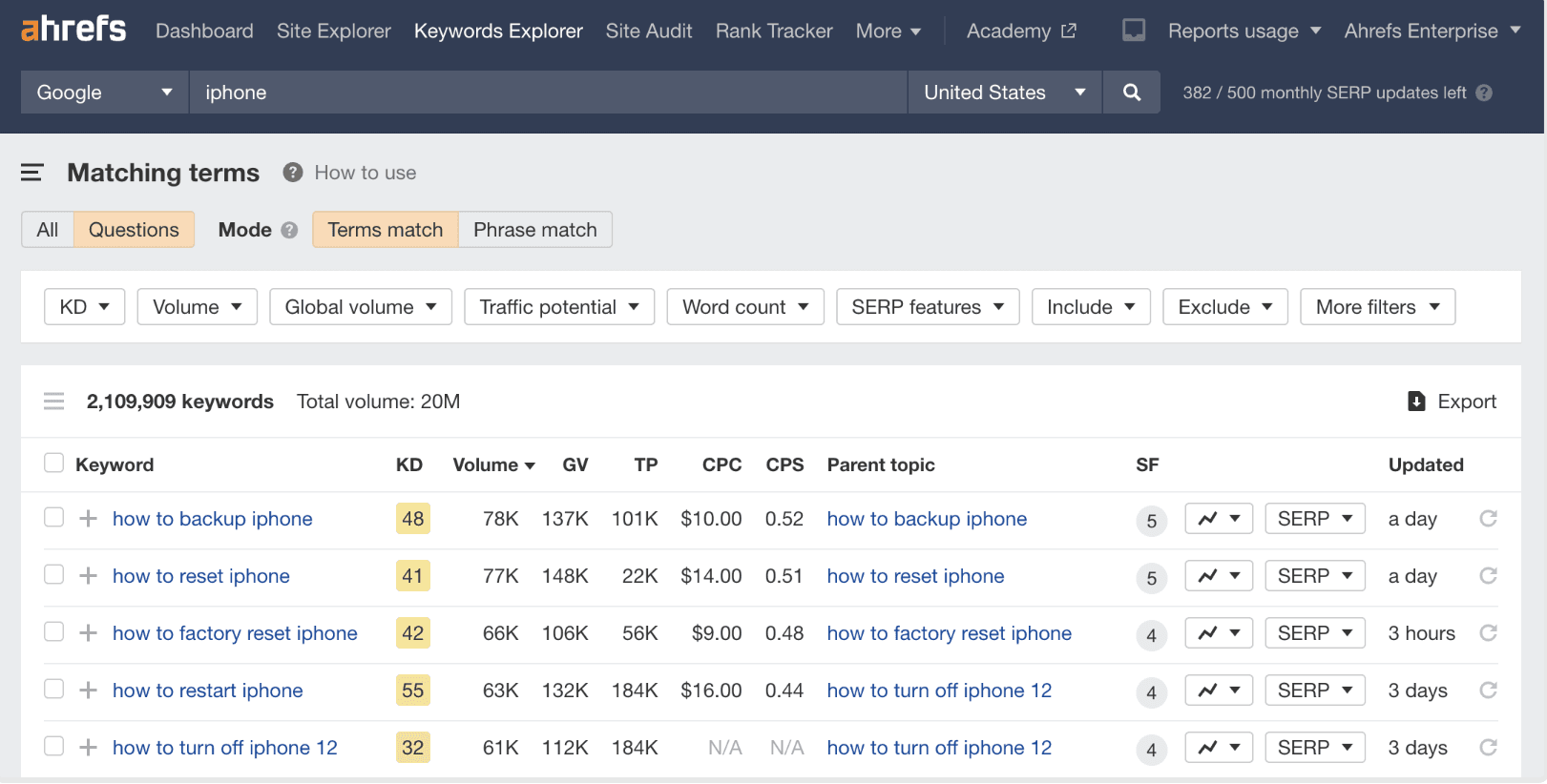
SEMRush Questions filter for keyword research
What's Actually Worked: AEO Optimization Tactics
Among all the SEO and AEO experiments I've run, here's what has moved the needle:
Fresh content gets indexed faster. I noticed this especially in ChatGPT. Fresh content gets picked up much quicker than older pages. AI chatbot and Google AI overview seem to prefer fresh content.
Update old articles and display the “last updated” date. This simple change has helped improve search rankings. If you have evergreen content, refresh it and make sure the updated date is visible. I aim to refresh high-performing posts every 3-6 months with updated statistics, new examples, and any insights from recent industry developments.
Listicles work. Listicle-format articles perform well in AI search results.
Add FAQs to product pages and blog posts. This has been one of the highest-ROI changes. FAQs directly match the question-based format that AI chatbots pull from.
Use question-based headings. When creating blog posts, update your H2s and H3s to the actual questions people are searching for. Instead of “Our Pricing Model,” write “How Much Does [Product] Cost?”
Structure your answers clearly. Use bullet points, numbered lists, and clear formatting so AI can easily extract and cite your content.
Internal linking still matters. Link to high-authority pages on your site and connect related topics to build topical authority.
Don't skip your metadata. Make sure you insert keywords into your page titles. Meta descriptions seem to matter less these days since Google tends to rewrite them, but title tags are still critical. My formula: keep it 50-60 characters, structure it as Primary Keyword + Value Proposition + Brand (if space), and write it to maximize click-through rate.
Try this prompt: “You are an SEO expert. Help me write a title tag for this page: [paste your page URL or describe the page content]. My primary keyword is [your keyword]. Keep it under 60 characters. Write 3 options optimized for click-through rate.”
Should You Use AI to Create Content?
Purely AI-generated content rarely stands out. AI creates content based on existing content, so by nature it's derivative. Google doesn't penalize AI content specifically, but it does penalize low-quality content, and unedited AI output is exactly the kind of generic content that gets buried. Ask yourself: do you actually enjoy reading pure AI-generated content? It reads like it has no soul.
However, I absolutely use AI to assist my writing. It's great for organizing thoughts, generating outlines, brainstorming angles, and catching things I might miss. But at the end of the day, any content you put out there should provide unique value. Content is the best way to build trust with users, and trust is what drives long-term business growth.
Use AI as a co-pilot, not autopilot. AI helps you move faster, but real SEO success still comes from your insights, judgment, and creativity. Always fact-check for accuracy, edit for your brand voice, and prioritize content that serves real human needs. SEO is not that complicated. Write great content that users are truly looking for. That's why we check search volume in the first place.
Should I Optimize Reddit for AEO/GEO?
If you have limited resources, invest in YouTube instead. YouTube has already overtaken Reddit as the most-cited social platform in AI-generated responses.
If you do want to improve Reddit visibility, ask your internal team to share their genuine experiences. I personally don't like the concept of spamming Reddit or trying to manipulate the channel with bots. I believe in building trust through real comments and real contributions.
Again, SEO is Not Dead
Search isn't dying. It's evolving. The fundamentals of creating valuable content, understanding what your audience is searching for, and making that content easy to find haven't changed. What's changed is that you now need to optimize for AI chatbots alongside Google.
Start with what you can measure, use the scrappy playbook if budget is tight, and above all, create content that actually helps people. That's what worked before AI search, and it's what will keep working as search continues to evolve.